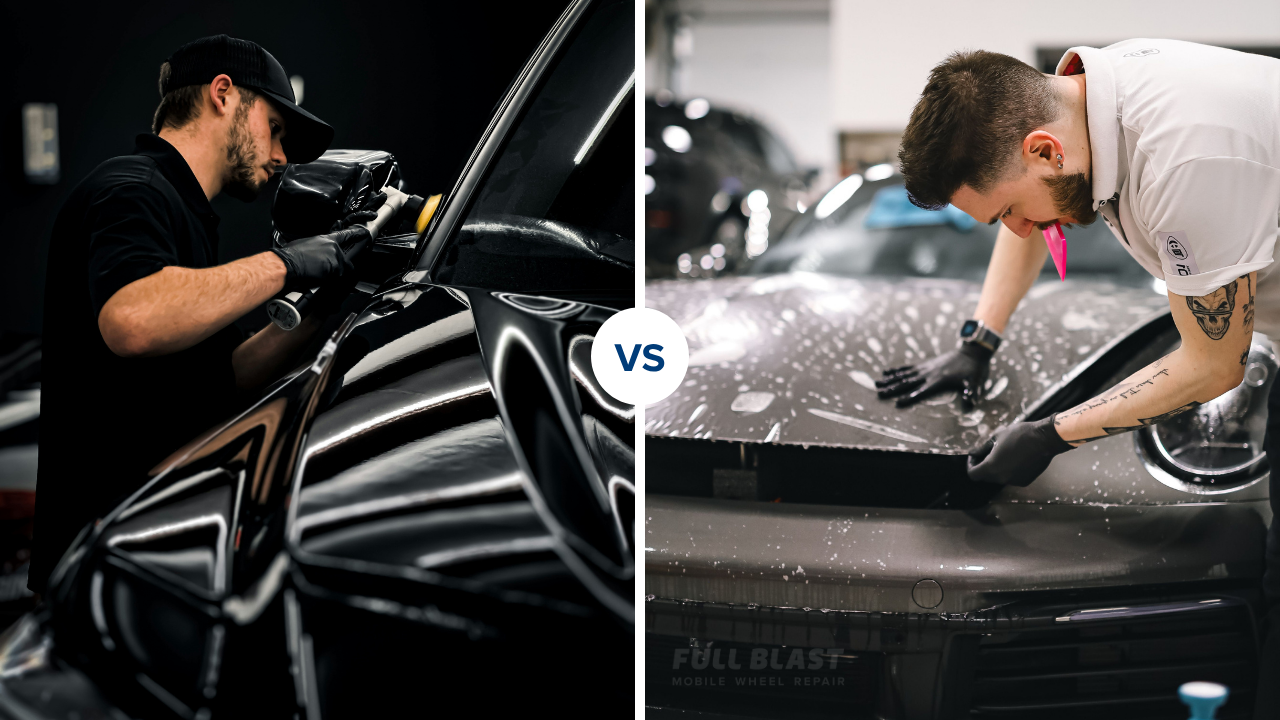
Ceramic coating vs paint protection film is one of the most common comparisons vehicle owners make when looking for long-term paint protection.
Paint protection film, commonly called PPF or a clear bra, is designed primarily to protect paint from physical damage such as rock chips, scratches, and road debris. Professional ceramic coating is designed to protect the finish from environmental contamination while enhancing gloss and making the vehicle easier to maintain.
Both can be valuable. The better option depends on what you are trying to protect against, how you use your vehicle, and how much maintenance you are prepared to do.
For some drivers, ceramic coating is the better investment. For others, PPF makes more sense. Vehicles that need a higher level of protection may benefit from using both.
What Is Ceramic Coating?
Ceramic coating is a liquid product professionally applied to a vehicle’s exterior. Once cured, it bonds with the clear coat and creates a durable protective layer over the paint.
Unlike traditional waxes and sealants that sit temporarily on the surface, a professional ceramic coating is designed to provide protection for several years when it is properly installed and maintained.
The most noticeable benefits include:
- Increased gloss and paint depth
- Strong water-repelling properties
- Greater resistance to environmental contaminants
- Easier washing and maintenance
- Protection against oxidation and ultraviolet exposure
- Reduced adhesion of dirt, road grime, bugs, and bird droppings
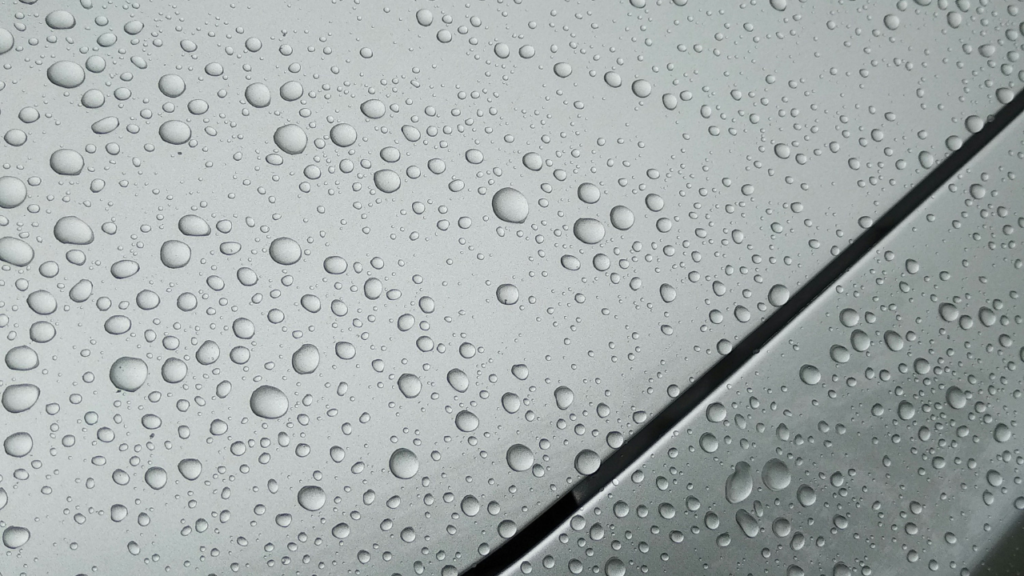
Ceramic coating creates a slicker surface, making it more difficult for contaminants to bond firmly to the paint. Water tends to bead on the surface rather than spreading evenly across the finish.
That does not mean the vehicle becomes maintenance-free. It means routine maintenance generally becomes easier, and the paint has an additional layer of protection against the substances it encounters during daily driving.
What Is Paint Protection Film?
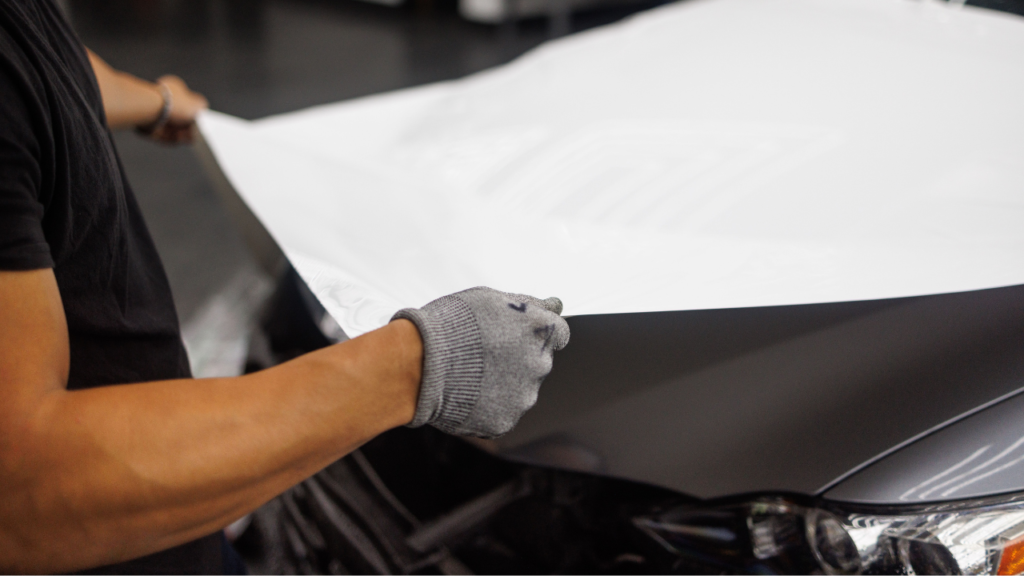
Paint protection film is a transparent polyurethane film installed directly over a vehicle’s painted surfaces.
Because PPF is a physical film rather than a liquid coating, it can absorb impacts that a ceramic coating cannot. It is commonly applied to the areas of a vehicle that receive the most road debris, including:
- Front bumper
- Hood
- Front fenders
- Side mirrors
- Rocker panels
- Door edges
- Areas behind the wheels
- Lower portions of the doors
Some vehicle owners choose partial-front coverage, while others protect the entire vehicle.
High-quality modern PPF is designed to be nearly invisible when professionally installed. Certain products also include self-healing properties that allow minor marks in the film to diminish with heat.
For example, 3M’s explanation of paint protection film describes PPF as protection against stone chips, scratches, bug damage, road tar, stains, automotive fluids, and outdoor weathering. Some 3M paint protection film products use self-healing technology that can reduce the appearance of minor scratches in the film itself.
Ceramic Coating vs Paint Protection Film: What Is the Biggest Difference?
When comparing ceramic coating vs paint protection film, the biggest difference is the type of protection each product provides. The simplest way to understand the difference is:
Paint protection film primarily protects against physical impact. Ceramic coating primarily protects against environmental contamination while making the vehicle easier to maintain.
Ceramic coating is useful for gloss, chemical resistance, water repellency, and easier cleaning. It is not thick enough to absorb the impact of a rock striking the vehicle at highway speed.
PPF creates a physical barrier between the road and the paint. It can absorb many light impacts, but it does not necessarily provide the same slickness, gloss enhancement, or ease of cleaning associated with ceramic coating.
This ceramic coating vs paint protection film comparison shows where each option provides the greatest benefit.
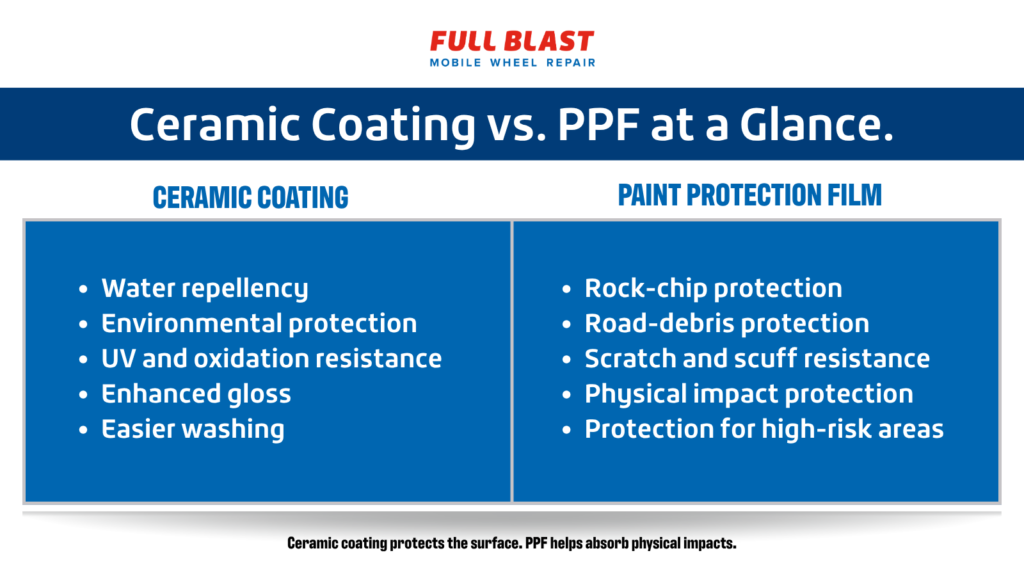
Ceramic Coating vs. PPF at a Glance
| Feature | Ceramic Coating | Paint Protection Film |
|---|---|---|
| Rock-chip protection | Minimal | Excellent |
| Light scratch protection | Limited resistance | Stronger physical protection |
| Water repellency | Excellent | Varies by film |
| Gloss enhancement | Excellent | Good, depending on the film |
| Chemical resistance | Excellent | Good |
| UV and oxidation protection | Excellent | Good |
| Ease of washing | Excellent | Good |
| Self-healing ability | No | Available with certain films |
| Full-vehicle application | Common | Available, but more expensive |
| Best use | Environmental protection and easier care | Physical protection from road damage |
What Does Ceramic Coating Protect Against?
Ceramic coating is best suited for the types of contamination and environmental exposure that gradually degrade a vehicle’s finish.
UV Exposure and Oxidation
Long-term exposure to sunlight can contribute to fading, oxidation, and deterioration of a vehicle’s clear coat.
Ceramic coating creates an additional protective barrier that helps reduce direct environmental exposure. This can be particularly valuable for vehicles parked outside regularly or kept for many years.
Bird Droppings, Bugs, and Tree Sap
Bird droppings, bug residue, and tree sap can stain or etch automotive paint, particularly when they are allowed to remain on the vehicle.
Ceramic coating does not make the paint immune to these substances. However, its chemical resistance and slick surface can make contamination easier to remove before permanent damage occurs.
Contaminants should still be cleaned off promptly.
Road Salt and Winter Grime
Michigan vehicles are regularly exposed to road salt, brine, slush, dirt, and chemical deicers.
Ceramic coating helps prevent this contamination from bonding as aggressively to the surface, making the vehicle easier to wash during winter. It does not eliminate the need to remove salt, but it can make routine winter maintenance more manageable.
Water and Dirt
The hydrophobic surface created by ceramic coating causes water to form beads rather than spreading evenly over the paint.
Water moving across the vehicle may carry loose dirt with it, helping the vehicle remain cleaner between washes. However, water droplets left to dry can still leave mineral deposits or water spots.
Ceramic coating is water-repellent. It is not water-spot-proof.
Light Wash-Induced Marring
A ceramic coating may provide some resistance to extremely light surface marks, but it should never be described as scratch-proof.
Improper washing, contaminated brushes, abrasive towels, and automatic brush car washes can still scratch or swirl coated paint.
What Does PPF Protect Against?
Paint protection film is the better choice when the primary concern is physical damage.
Rock Chips
The front of a vehicle is constantly exposed to gravel, pavement fragments, and other road debris. PPF can absorb many of these impacts before they reach the clear coat and paint underneath.
This is one of the main reasons vehicle owners apply PPF to the front bumper, hood, mirrors, and fenders.
Road Debris
PPF can protect against sand, salt, small stones, insects, and other debris thrown toward the vehicle while driving.
Drivers who regularly travel on highways, construction routes, or gravel roads may receive greater value from PPF than someone who primarily drives short distances at lower speeds.
Scratches and Scuffs
PPF can reduce damage from light scratches, parking-lot contact, branches, door edges, and similar surface hazards.
It cannot prevent every type of damage. A severe impact can still penetrate the film or dent the body panel. However, PPF provides substantially more physical protection than ceramic coating alone.
High-Contact Areas
PPF can also be installed strategically in areas prone to repeated contact, including:
- Door-handle cups
- Door edges
- Trunk loading areas
- Rocker panels
- Rear bumper ledges
- Areas frequently contacted by shoes, bags, or cargo
What Ceramic Coating Does Not Protect Against
Ceramic coating is frequently misunderstood because some advertising makes it sound as though it creates an impenetrable shell around the vehicle.
It does not.
Ceramic coating will not reliably prevent:
- Rock chips
- Dents
- Deep scratches
- Collision damage
- Paint damage caused by improper washing
- Water spots in every circumstance
- Damage caused by neglected contaminants
- The need for routine maintenance
A ceramic-coated vehicle can still be scratched or chipped. It still needs to be washed correctly.
The advantage is that the finish becomes more resistant to environmental contamination, maintains its appearance more easily, and is generally simpler to clean.
What Does a 9H Ceramic Coating Mean?
The term “9H” is commonly used when describing professional ceramic coatings, but it is often misunderstood.
It does not mean that the coating will resist rocks, keys, deep scratches, or physical impacts. It refers to a surface-hardness rating associated with the cured coating.
A professional-grade 9H coating can add resistance against light environmental wear and contamination, but it does not turn automotive paint into an impact-resistant surface.
Customers considering one of our professional ceramic coating packages in Grand Rapids should view the coating as long-term surface protection—not as a replacement for PPF.
What PPF Does Not Protect Against
PPF also has limitations.
It cannot prevent:
- Dents from significant impacts
- Damage that penetrates the film
- Every possible scratch or stone chip
- Contamination caused by neglected maintenance
- Wear along damaged or improperly installed edges
- Aging of uncovered vehicle surfaces
The film itself may become damaged over time. In many cases, that means it has absorbed damage that otherwise could have reached the original paint.
Replacing a damaged section of film may be preferable to repainting an original body panel.
Installation quality is especially important. Poorly installed film may have visible edges, trapped contamination, bubbles, lifting, or uneven coverage.
Ceramic Coating vs Paint Protection Film Cost Comparison
PPF is generally more expensive when comparing similar amounts of vehicle coverage because installing film is highly labor-intensive.
The price of paint protection film depends on:
- How much of the vehicle is covered
- Vehicle size and body shape
- Complexity of the panels
- Film brand and product type
- Installer experience
- Whether panel edges are wrapped
- Whether paint correction is needed first
A partial-front installation will cost less than full-body PPF. Full-body coverage can represent a substantial investment, particularly on large vehicles or vehicles with complicated bodywork.
Ceramic coating pricing is also influenced by the size and condition of the vehicle. However, a significant portion of the investment is often the preparation performed before the coating is applied.
A ceramic coating vs paint protection film cost comparison must account for the amount of the vehicle being protected and the preparation included in the service.
Proper ceramic coating installation may include:
- Thorough washing
- Chemical decontamination
- Mechanical decontamination
- Paint inspection
- Paint correction
- Surface preparation
- Controlled coating application
- Curing
A lower quote may exclude paint correction, use a shorter-lasting product, or cover fewer surfaces.
That is why customers should compare exactly what is included - not just the advertised price.
Why Paint Correction Matters Before Ceramic Coating or PPF
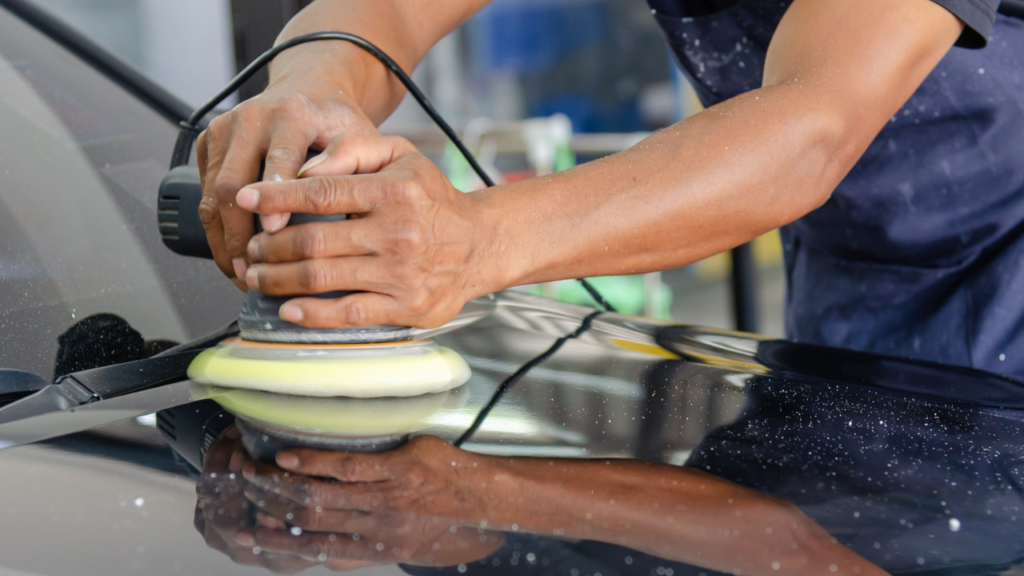
Neither ceramic coating nor PPF should be used to hide damaged or neglected paint.
Ceramic coating preserves the condition of the surface beneath it. If scratches, haze, oxidation, or swirl marks remain, those imperfections may still be visible after the coating is installed.
PPF is transparent, so defects underneath the film can also remain visible.
Paint correction removes or reduces eligible surface defects before protection is installed. This improves paint clarity, gloss, and the overall finished appearance.
At Full Blast Wheel Repair, our ceramic coating pricing and packages include paint correction because the quality of the preparation directly affects the appearance, bonding, and performance of the coating.
Ceramic Coating or PPF for a Daily Driver?
Choosing ceramic coating vs paint protection film for a daily driver ultimately depends on the vehicle owner’s biggest concern. For many daily drivers, ceramic coating provides the most noticeable everyday benefit.
A coated daily driver is generally easier to wash and dry and is less likely to hold onto road grime. This is particularly useful in Michigan, where vehicles experience rain, snow, salt, slush, pollen, insects, and rapidly changing weather conditions.
Ceramic coating may be the better choice when:
- You want easier maintenance
- You want greater gloss and paint depth
- You want protection against environmental contamination
- You are concerned about salt, oxidation, UV exposure, bugs, and bird droppings
- You do not regularly drive in high-impact conditions
- Full-body PPF does not fit your budget
PPF may be the better choice when:
- You do extensive highway driving
- You are highly concerned about rock chips
- Your vehicle has expensive, rare, matte, or difficult-to-match paint
- You regularly travel on gravel roads or construction routes
- Preserving the original paint is the main priority
- Physical impact protection matters more than ease of maintenance
Which Is Best for a Brand-New Vehicle?
A new vehicle can be an excellent candidate for either service because protecting good paint is generally easier than restoring damaged paint later.
PPF can be particularly valuable when preserving the original paint against chips is the main priority. Ceramic coating is valuable when the owner wants to preserve gloss, reduce environmental wear, and simplify long-term maintenance.
However, “new” does not always mean flawless.
A recently purchased vehicle can already have:
- Dealership wash marks
- Light swirl marks
- Adhesive residue
- Transportation contamination
- Water spots
- Minor scratches from handling
The paint should still be inspected before either product is installed. Some new vehicles may require polishing or paint correction to produce the best result.
Can Ceramic Coating Be Applied Over PPF?
Yes, compatible ceramic coatings can be applied over certain paint protection films.
This combination provides two different forms of protection:
- PPF absorbs many physical impacts.
- Ceramic coating adds hydrophobic behavior, chemical resistance, gloss, and easier maintenance.
XPEL, for example, states that its COLOR PPF is compatible with its FUSION PLUS ceramic coatings.
A common premium approach is to install PPF on the highest-impact areas and ceramic coat the entire exterior, including compatible protected sections.
For example:
- Apply PPF to the front bumper, hood, front fenders, and mirrors.
- Apply a compatible ceramic coating over the film and remaining painted surfaces.
- Maintain the entire vehicle using coating-safe washing practices.
Compatibility should always be confirmed with the manufacturers and professional installers involved. Not every coating and film combination should be treated identically.
Is It Worth Getting Both?
Getting both may make sense for:
- New luxury or performance vehicles
- Collectible vehicles
- Vehicles with expensive or difficult-to-match paint
- High-mileage highway drivers
- Owners planning to keep the vehicle for many years
- Anyone seeking both physical and environmental protection
It may not be necessary for every vehicle.
A driver primarily concerned with easier washing, gloss, and environmental contamination may be satisfied with ceramic coating alone. Someone mainly concerned about stone chips may receive more value from partial-front PPF.
The right solution depends on the vehicle, driving habits, ownership plans, budget, and expectations.
Ceramic Coating vs. PPF: Which One Is Better?
Neither product is universally better. They solve different problems.
Ceramic coating is likely the better choice when your priorities are:
- Easier washing
- Improved gloss
- Water repellency
- Environmental and chemical resistance
- UV and oxidation protection
- Full-body coverage at a lower cost than full-body PPF
Paint protection film may make more sense when your priorities are:
- Rock-chip protection
- Scratch and scuff resistance
- Physical impact protection
- Protecting high-risk areas
- Preserving original paint
Choose both when you want physical impact protection combined with easier maintenance, water repellency, gloss, and environmental protection.
Ceramic Coating vs. Paint Protection Film FAQ
Neither is universally better because they protect against different things. Ceramic coating is best for gloss, easier cleaning, water repellency, and environmental protection. Paint protection film is better for rock chips, scratches, and physical impact.
No. Ceramic coating is too thin to absorb the impact of stones and road debris. Paint protection film is the better option when rock-chip protection is the main priority.
Yes, many compatible ceramic coatings can be applied over paint protection film. This combines the physical protection of PPF with the gloss, hydrophobic properties, and easier maintenance provided by ceramic coating.
PPF is usually more expensive when covering a similar amount of the vehicle because film installation is highly labor-intensive. Pricing also depends on the vehicle, coverage area, film type, paint condition, and installer.
Ceramic coating is often the more noticeable everyday upgrade because it makes washing and maintaining the vehicle easier. Drivers who spend significant time on highways or are especially concerned about rock chips may benefit more from PPF.
Paint correction may be needed when the vehicle has swirl marks, scratches, oxidation, haze, or other eligible paint defects. Both ceramic coating and PPF preserve the appearance of the surface underneath, so proper preparation is important.
It can be. A common approach is to apply PPF to high-impact areas such as the front bumper, hood, mirrors, and fenders, then apply ceramic coating over compatible film and the remaining painted surfaces.
Professional Ceramic Coating in Grand Rapids, Michigan
Full Blast Wheel Repair provides professional full-body ceramic coating in Grand Rapids and the surrounding area.
Our packages include the paint correction and preparation required to achieve proper bonding, clarity, gloss, and long-term performance.
Depending on the selected package, services may include:
- Professional-grade 9H ceramic coating
- Full paint correction
- Long-lasting gloss enhancement
- Hydrophobic surface protection
- Resistance to UV exposure, oxidation, chemicals, dirt, and grime
- Free pickup and drop-off within 30 miles of Grand Rapids, subject to availability and service requirements
Ceramic coating will not make a vehicle indestructible. When properly installed and maintained, however, it can help preserve the finish, improve its appearance, and make caring for the vehicle significantly easier.
View our ceramic coating packages and pricing or request an appointment online to determine whether ceramic coating is the right protection for your vehicle.