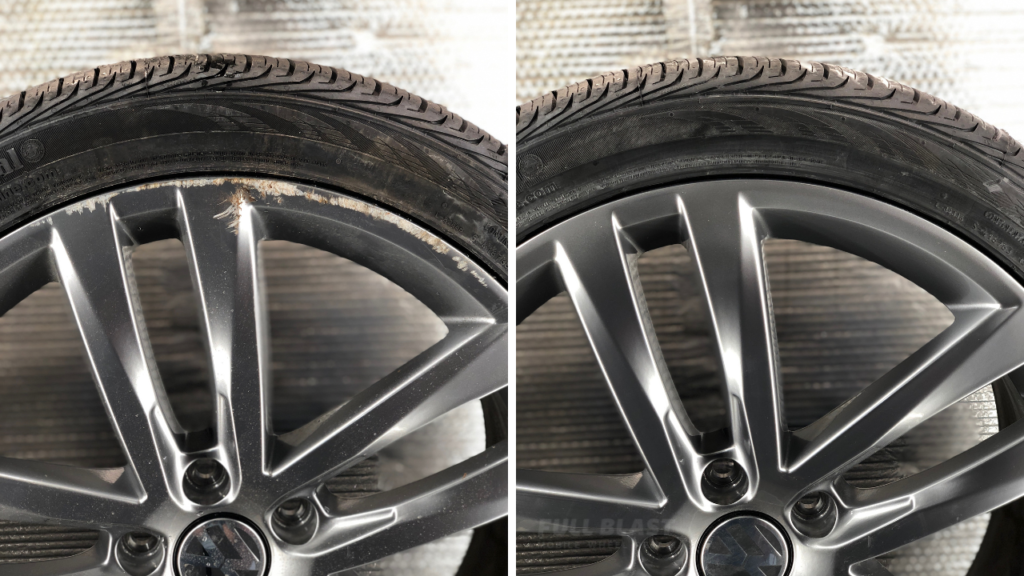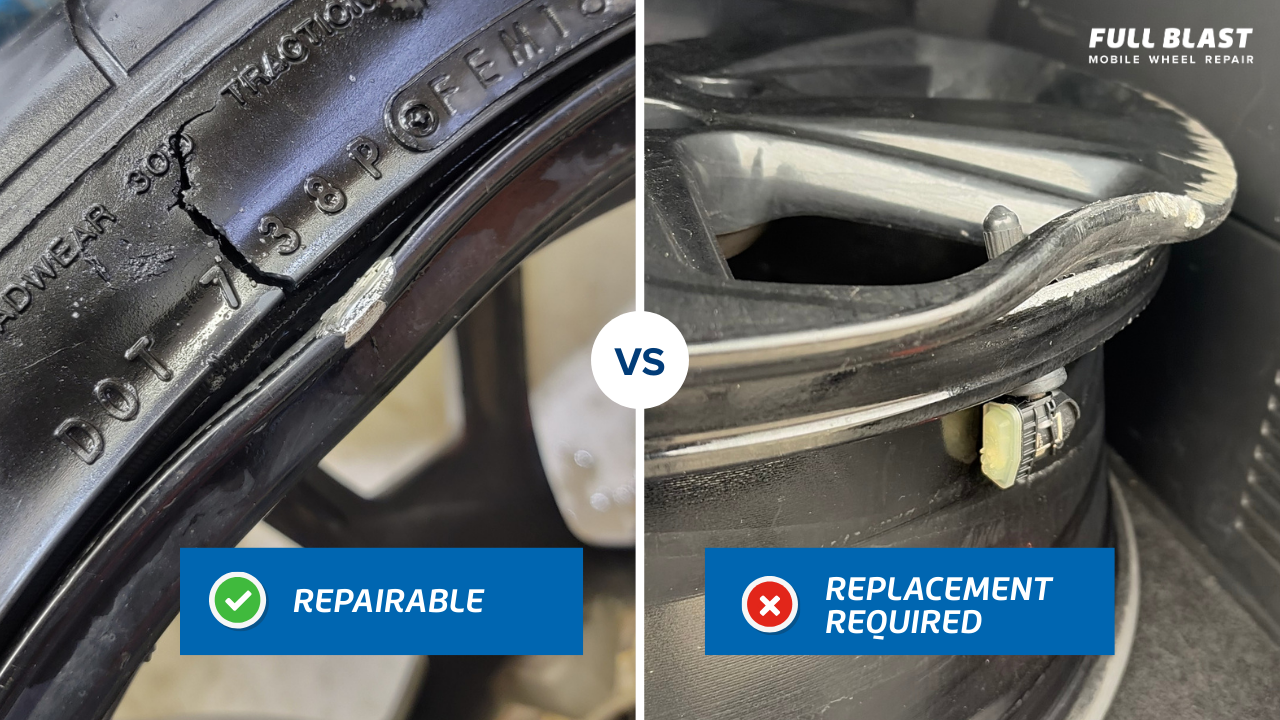
Hitting a pothole or curb can leave you wondering whether your wheel can be repaired or if it needs to be replaced entirely. Wheel damage is extremely common, but not every damaged wheel should be repaired.
In many cases, bent wheel repair is possible. In other situations, replacement is the only responsible option. The key factor is where the damage is located and how severe it is.
This guide explains when bent wheel repair is possible, when it isn’t safe, and what your options are if your wheel cannot be repaired.
Quick Guide: Can My Bent Wheel Be Repaired?
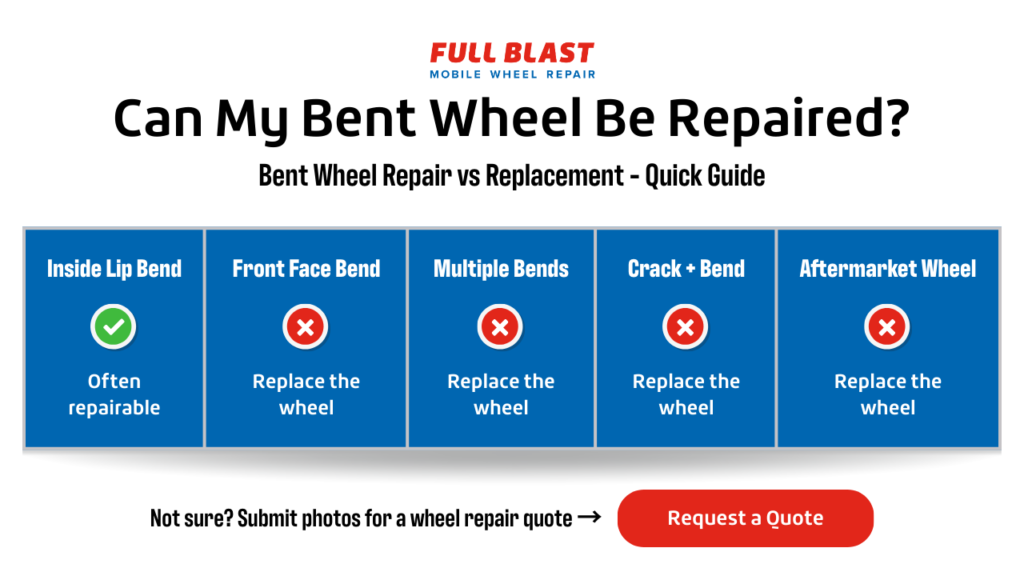
If you just want the quick answer, here are the most common situations:
- Bend on the inside lip of the wheel → often repairable ✅
- Bend on the outer face of the wheel → replacement required ❌
- Multiple bends in wheel → replacement required ❌
- A crack + a bend → replacement required ❌
- Aftermarket wheel with a bend or crack → replacement required ❌
If you're unsure, the easiest way to find out is to submit photos for a quote and we can review the damage.
The Most Common Types of Wheel Damage
Most wheel damage falls into one of two categories: structural damage or cosmetic damage.
Structural damage affects the strength and safety of the wheel. This includes issues such as:
- Bent wheels
- Cracked wheels
Cosmetic damage affects the appearance of the wheel but typically does not impact its structural integrity. Common cosmetic issues include:
- Curb rash
- Paint damage
- Clear coat peeling or corrosion
Structural damage is the most serious type of wheel damage and often occurs after hitting potholes, road debris, or curbs. When a wheel is bent or cracked, the key question becomes whether it can be safely repaired or if replacement is necessary.
If the Front Face of the Wheel Is Bent
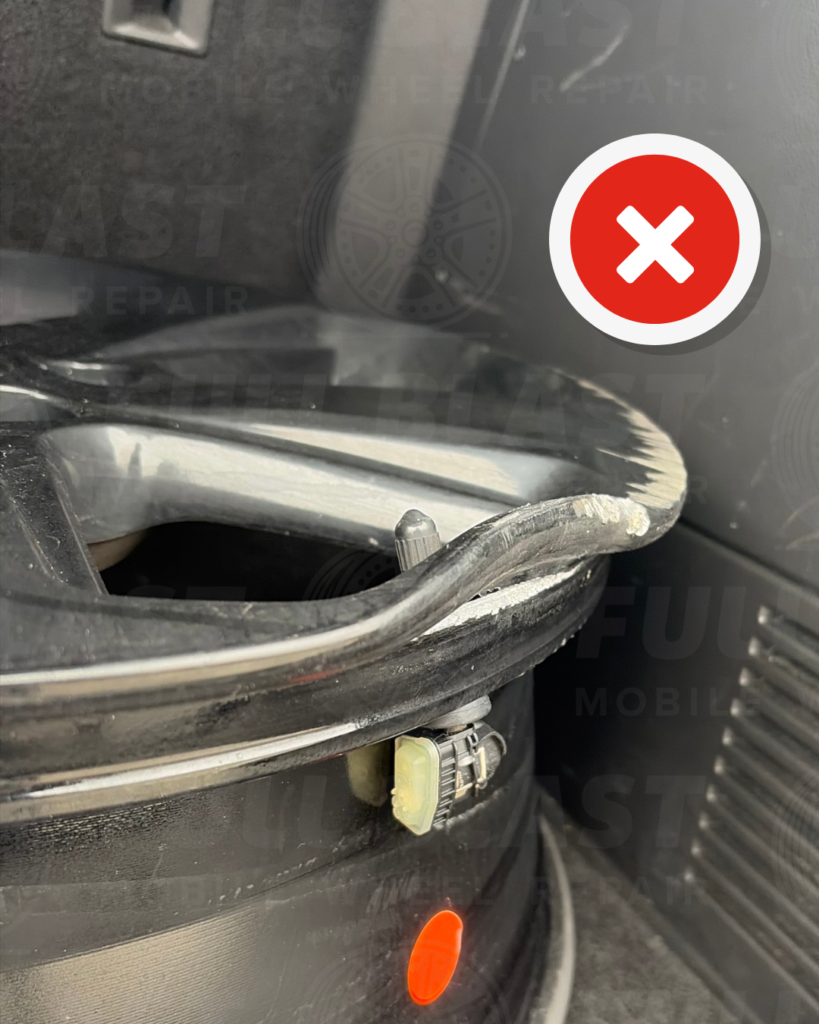
If the bend is on the front face of the wheel, the wheel cannot be repaired safely.
The face of the wheel is a structural area designed to support the vehicle’s weight and absorb road forces. When this part of the wheel becomes bent, the metal has already been pushed beyond its structural limits.
Attempting to bend it back into place weakens the material further. Even if the wheel appears straight again, the metal has already been compromised and can crack the next time the wheel experiences a hard impact.
For this reason, reputable wheel repair specialists do not repair bends on the face of a wheel. Replacement is the only safe option.
If the Bend Is on the Backside of the Wheel
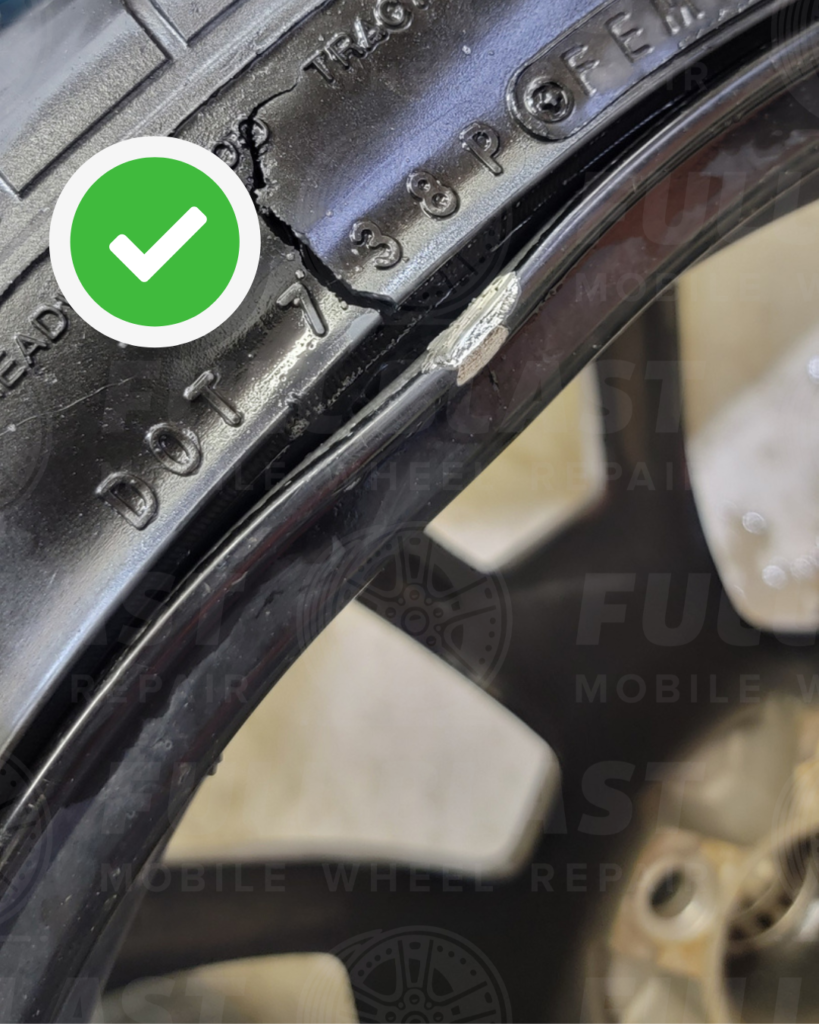
Bends located on the backside lip of the wheel are much more common and are often repairable.
This type of damage usually occurs when a pothole pushes the inner lip of the wheel inward. With the proper equipment, the wheel can often be carefully straightened back to its original shape.
However, repair is typically only recommended when:
- The bend is located on the inner lip
- The wheel has a single bend
- The wheel is not cracked
When these conditions are met, professional straightening can often restore the wheel safely.
Important Note About Aftermarket Wheels
Even if a bend is located on the inside lip of the wheel, not all wheels can be safely repaired.
In particular, many aftermarket wheels are not good candidates for bend repair.
The aluminum blend used in most aftermarket wheels tends to be more brittle than OEM factory wheels. Because of this, even if a straightening repair were attempted there is a higher likelihood the wheel could bend again or crack after being repaired.
❌ For safety reasons, many professional wheel repair specialists -including our team - do not perform bend repairs on aftermarket wheels.
If an aftermarket wheel becomes bent, the safest and most reliable solution is typically replacement rather than repair.
When a Bent Wheel Is NOT Repairable
There are several situations where a wheel should not be repaired.
Multiple Bends in the Wheel
If a wheel has multiple bends in different locations, the structure of the wheel has likely been significantly compromised. Attempting to repair several bends increases the risk of future cracking or failure.
In most cases, wheels with multiple bends should be replaced.
A Wheel That Is Both Cracked and Bent
If a wheel is both bent and cracked, it should not be repaired.
A crack indicates that the metal has already failed. When a crack is present along with a bend, the structural integrity of the wheel is no longer reliable.
Replacement is the safest option.
What to Do If Your Wheel Needs to Be Replaced
If your wheel cannot be safely repaired, replacement is the only responsible option.
When replacing a wheel, one of the most important decisions is whether to choose an OEM wheel or an aftermarket wheel.
OEM vs Aftermarket Wheels: Why the Difference Matters
Original equipment manufacturer (OEM) wheels are engineered specifically for your vehicle and are designed to meet the manufacturer’s strength and safety standards.
Aftermarket wheels vary widely in quality. While some aftermarket wheels are well made, many are produced with weaker materials and less rigorous engineering standards.
In practice, a large percentage of the bent and cracked wheels brought in for repair are aftermarket wheels.
For that reason, repairing an OEM wheel is often a better long-term option than replacing it with a lower-quality aftermarket wheel. OEM wheels typically provide better durability, better fitment, and better long-term reliability.
Getting a Professional Wheel Inspection
If you are unsure whether your wheel can be repaired, the best step is to have it inspected by a professional wheel repair specialist.
Common signs of wheel damage include:
- Steering wheel vibration
- A slow air leak
- Visible damage on the inner lip of the wheel
- A tire that repeatedly loses pressure
Drivers throughout West Michigan frequently discover bent wheels after hitting potholes or road debris. In many cases the damage is not immediately obvious.
A professional inspection can determine whether the wheel can be safely repaired or if replacement is the better option.
Common Questions About Bent Wheel Repair
Can a Bent Rim Be Repaired?
Yes, a bent rim can often be repaired, but it depends entirely on where the damage is located and how severe it is.
If the bend is on the inside lip of the wheel, it can usually be straightened using specialized hydraulic equipment. This type of damage is common after hitting potholes and is often repairable on OEM aluminum wheels.
However, if the bend is on the front face of the wheel, the wheel typically cannot be repaired safely. The face of the wheel is a structural area, and attempting to straighten it can weaken the metal and increase the likelihood of cracking.
In those cases, replacement is the safer option.
Can a Cracked Rim Be Repaired?
In many cases, cracked rims can be repaired. However, whether a repair is possible depends on the location of the crack and the overall condition of the wheel.
When a wheel develops a single crack and the rest of the wheel is structurally sound, professional welding and refinishing can often restore the wheel safely.
However, there are situations where a cracked wheel should not be repaired. These include cases where:
- The wheel is both cracked and bent
- The wheel has multiple cracks
- The crack is located in a high-stress structural area
- The wheel has already been previously repaired
In these situations, the structural integrity of the wheel may be compromised, and replacement is usually the safer option.
The best way to determine whether a cracked rim can be repaired is to have the wheel inspected by a professional wheel repair specialist.
How Much Does Bent Rim Repair Cost?
The cost to repair a bent rim typically depends on:
- The severity of the bend
- Whether the wheel is OEM or aftermarket
- Whether there are multiple bends
For most wheels, straightening a single bend usually falls between $200 and $350 per wheel, depending on the severity of the damage once the wheel is inspected.
More severe damage or multiple bends may require replacement instead of repair.
How Do I Find Wheel Repair Near Me?
If you suspect your wheel is bent or damaged, the best step is to have it inspected by a professional wheel repair specialist.
Many drivers notice symptoms such as:
- Steering wheel vibration
- A slow air leak
- Visible damage on the inner lip of the wheel
A professional inspection can determine whether the wheel can be safely repaired or if replacement is necessary.
Drivers throughout West Michigan often seek professional inspections after hitting potholes or road debris, since wheel damage is not always immediately obvious.
Request a Wheel Repair Quote
If you believe your wheel may be repairable, the next step is to submit photos for evaluation.
Please note: We do not perform bend repairs on aftermarket wheels due to the higher risk of cracking or repeat damage.
You can request a quote using our online form here:
Please note that we only evaluate wheels through our quote request form. After reviewing your photos, we can let you know whether the wheel may be repairable or if replacement is the safer option.